Email plays an important role in everyday life. We use it for account registration, communication, shopping, banking, work, and online services. However, not every situation requires the same type of inbox.
Many users now rely on temporary email services for privacy and convenience, while traditional email accounts remain essential for long-term communication and account management. Understanding the strengths of each option can help you make better decisions online.
In this guide, we'll compare both solutions, explain their advantages, and help you decide which one is right for different situations.
Table of Contents
- What Is Temp Mail?
- What Is Regular Email?
- Key Differences
- When to Use Temp Mail
- When to Use Regular Email
- Privacy Comparison
- Security Comparison
- Save & Restore Inbox
- Which One Should You Choose?
- Frequently Asked Questions
- Related Guides
What Is Temp Mail?
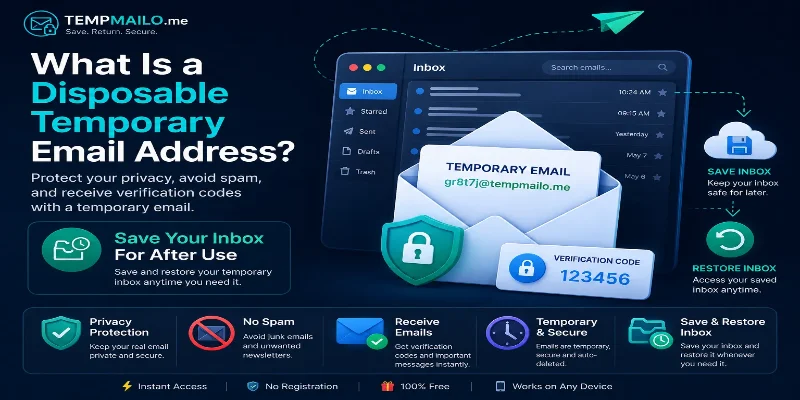
A temporary email address is a short-term inbox designed for quick online activities such as registrations, account verification, software testing, and downloading resources.
Instead of exposing your personal inbox to every website, you can generate a temp mail address instantly and receive messages without creating a permanent account.
The main goal is privacy and convenience. Once you no longer need the inbox, you can simply stop using it.
What Is Regular Email?
A regular email account is designed for long-term communication. It becomes your permanent online identity and is commonly used for work, banking, social media, shopping, subscriptions, and personal communication.
Unlike temporary inboxes, traditional email accounts usually include password recovery options, security settings, storage, contact management, and long-term access to messages.
Most people use a regular email account for important online services that they expect to access for many years.
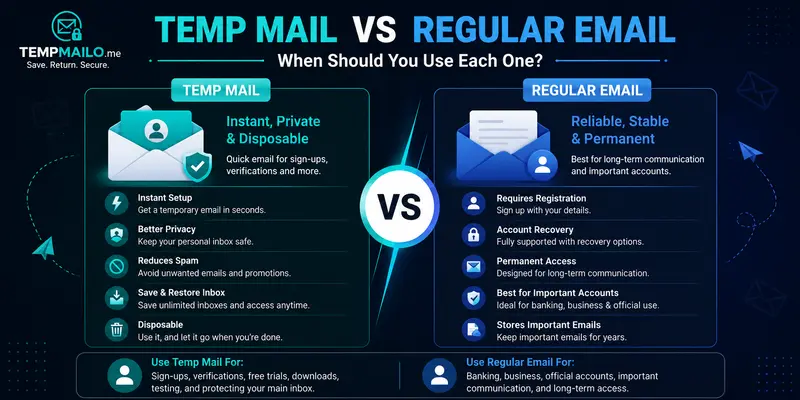
Key Differences
TempMailo.me
- Instant setup
- Better privacy
- Reduces spam
- Save & Restore Inbox available
Regular Email
- Permanent access
- Full account recovery
- Best for banking and business
- Long-term communication
Both options have their place. The best choice depends on what you are trying to accomplish.
When to Use Temp Mail
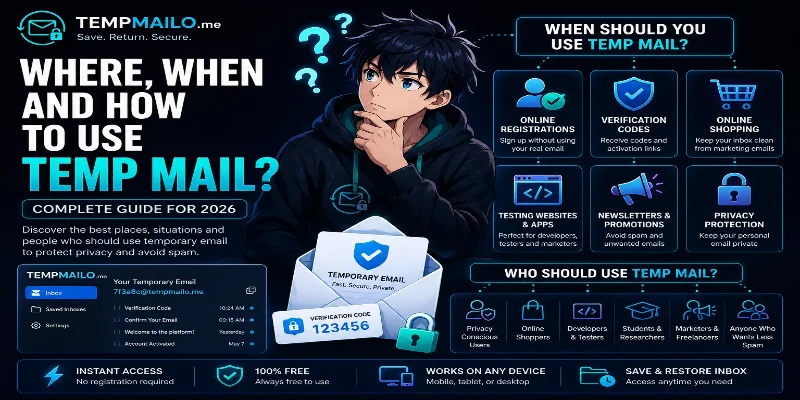
A temporary inbox works best when you need an email address for a short period and do not expect ongoing communication.
Common situations include:
- Creating test accounts
- Downloading free resources
- Receiving verification emails
- Joining online communities
- Trying a new service before committing
- Protecting your personal inbox from marketing emails
If your goal is privacy and convenience, a temporary email can be a practical solution.
When to Use Regular Email
Permanent inboxes should be used whenever long-term access matters.
Examples include:
- Bank accounts
- Business communication
- Government services
- School and university accounts
- Cloud storage platforms
- Online subscriptions
- Password recovery systems
If you may need to recover the account in the future, a regular email account is usually the safest option.
Privacy Comparison
Privacy is one of the biggest reasons people choose temporary inboxes.
Every website that receives your personal email address gains another way to contact you. Over time, this can result in newsletters, advertisements, and unwanted messages filling your inbox.
A disposable email address allows you to separate one-time registrations from your primary email account.
This helps reduce exposure while keeping your personal inbox cleaner and easier to manage.
Security Comparison
Security depends on how the email address is being used.
Regular email accounts typically offer advanced security features such as two-factor authentication, recovery options, login alerts, and long-term control over account access.
Temporary inboxes are secure for low-risk tasks but should not be used for financial services, confidential information, or critical online accounts.
The safest strategy is to use each type of inbox for the purpose it was designed for.
Save & Restore Inbox
Many temporary inbox services remove access after a short period. This can become frustrating when a verification email arrives later than expected.
TempMailo offers a Save & Restore Inbox feature that helps solve this problem. Users can save a mailbox with a password and restore it later when needed.
This creates a useful balance between privacy and convenience.
You can learn more on the Save Temp Email page.
Which One Should You Choose?
The answer depends on your needs.
If you need a quick inbox for a website registration, verification email, or testing purpose, a temporary address can save time and protect your privacy.
If the account contains important information or requires long-term access, a permanent email account remains the better choice.
Many users successfully combine both approaches by keeping a regular inbox for important services and using temporary addresses when privacy is a priority.
Frequently Asked Questions
Is temp mail better than regular email?
Neither option is better in every situation. Temporary inboxes are useful for privacy and short-term use, while regular email is better for long-term communication.
Can I replace my personal email with temp mail?
No. Temporary inboxes should complement your primary email account rather than replace it.
Which option is better for avoiding spam?
Temporary email is very effective because it prevents websites from obtaining your personal email address.
Can I use temp mail for online shopping?
It may be suitable for some low-risk situations, but order tracking and account management are usually easier with a permanent inbox.
Can I save a temporary inbox?
Yes. TempMailo allows users to save and restore selected inboxes using a password.
Should I use temporary email for banking?
No. Banking and financial accounts should always use a permanent email address.
Final Thoughts
Temp mail and regular email are designed for different purposes. One focuses on privacy and flexibility, while the other provides long-term access and account management.
Understanding when to use each option can help you stay organized, protect your privacy, and reduce unwanted messages without sacrificing security.
For quick registrations and inbox protection, temporary email can be extremely useful. For important services, a permanent email account remains essential.